Workshop Kit
Run a structured empathy session with your team, students, or members. Everything you need: the device, the guide, the conversation (in one kit).
Who it's for
Built for groups, designed for impact
Companies
HR teams and DEI leads looking to build real awareness around menstrual health in the workplace. A hands-on session that goes further than a presentation.
Well-being days, DEI workshops, onboarding sessions
Associations & NGOs
Organizations working on women's health, gender equality, or health education. A tangible tool to put lived experience at the center of your advocacy.
Community events, fundraising activities, awareness campaigns
Universities
Health education departments, student unions, and campus well-being initiatives. Open honest conversations about menstrual health in a structured setting.
Health fairs, gender studies courses, peer education programs
Animation guide
How to run a session
A workshop typically runs between 30 and 60 minutes. Below is a step-by-step guide you can follow as-is or adapt to your audience. No prior facilitation experience is required.
Welcome participants and briefly explain the purpose of the session: building empathy around menstrual pain through a direct physical experience.
Establish ground rules: participation is voluntary, no one is required to reach a specific level, and the session is a judgment-free space.
Quick context: share one or two facts about menstrual pain, for example, that dysmenorrhea affects up to 90% of menstruating people, and that its impact on daily life is consistently underestimated.
Tip: Keep this phase short. The goal is to frame the experience, not to lecture. The device will do the talking.
Distribute the devices and explain that participants should not use them if they have a pacemaker, are pregnant, have epilepsy, or have open wounds on their abdomen.
Show everyone how to attach the electrode pads to the lower abdomen, symmetrically, just below the navel. Allow time for everyone to be set up before proceeding.
Remind participants that the dial should start at zero, and that they should increase intensity slowly, at their own pace.
Reassure the group: the device can be stopped at any time. There is no expected level to reach, and no one should push through genuine discomfort.
Tip: For groups of 10+, ask a co-facilitator or a volunteer to circulate and help with setup. This phase should feel calm and unhurried.
Ask participants to switch on their device and increase the intensity gradually, starting at level 1 or 2. Give them 2–3 minutes to settle into the sensation.
Guide the group through the levels with prompts: "Try to increase to a level where you're genuinely distracted. Stay there for a moment."
Introduce context while they experience it: "At this level, many people would still be expected to come to work. Some would be at this level for hours." Pause between prompts, let the sensation speak.
For braver groups: invite those who are comfortable to continue increasing. Remind everyone that level 10 represents the most severe end of menstrual pain, a reality for a significant number of people every month.
Close the experience by asking everyone to reduce the dial to zero and switch off. Allow 1–2 minutes of quiet before moving to discussion.
Tip: Silence is powerful here. Resist the urge to fill it. Let people sit with the experience for a moment before opening the conversation.
Open with a simple question: "What level did you reach, and what did it feel like to stay there?" This is non-threatening and gets people talking.
Follow-up prompts to go deeper: "Did you find yourself thinking about what you'd need to get through the day at this level?" / "What surprised you?" / "What do you think you'll do differently?"
If menstruating participants are present, invite them to share, on their own terms, whether the experience matched their reality. This often becomes the most powerful moment of the session.
Bring in the workplace / campus angle for professional or academic settings: "What would it mean for how we design policies, how we respond to absences, how we talk about this at work?"
Tip: Don't over-moderate. The best discussions are the ones that go somewhere unexpected. Your role is to hold the space, not to direct the outcome.
Summarize the session in one sentence: "Today you felt, even briefly, what millions of people navigate every month. That's not a small thing."
Invite each participant to name one thing they'll do differently, however small. This could be in their relationship, their workplace, or simply how they talk about it.
Thank participants and, if relevant, share any follow-up resources, on menstrual health, workplace accommodations, or related topics.
Tip: Written commitments, even just a word on a sticky note, have been shown to significantly increase follow-through. Consider adding this step for professional settings.
What you get
Everything included in the kit
Period Cramp Simulator device(s)
3-pack or 5-pack depending on group size. Each unit is fully autonomous.
This animation guide
5 phases, timing, facilitator tips, free and available on this page at any time.
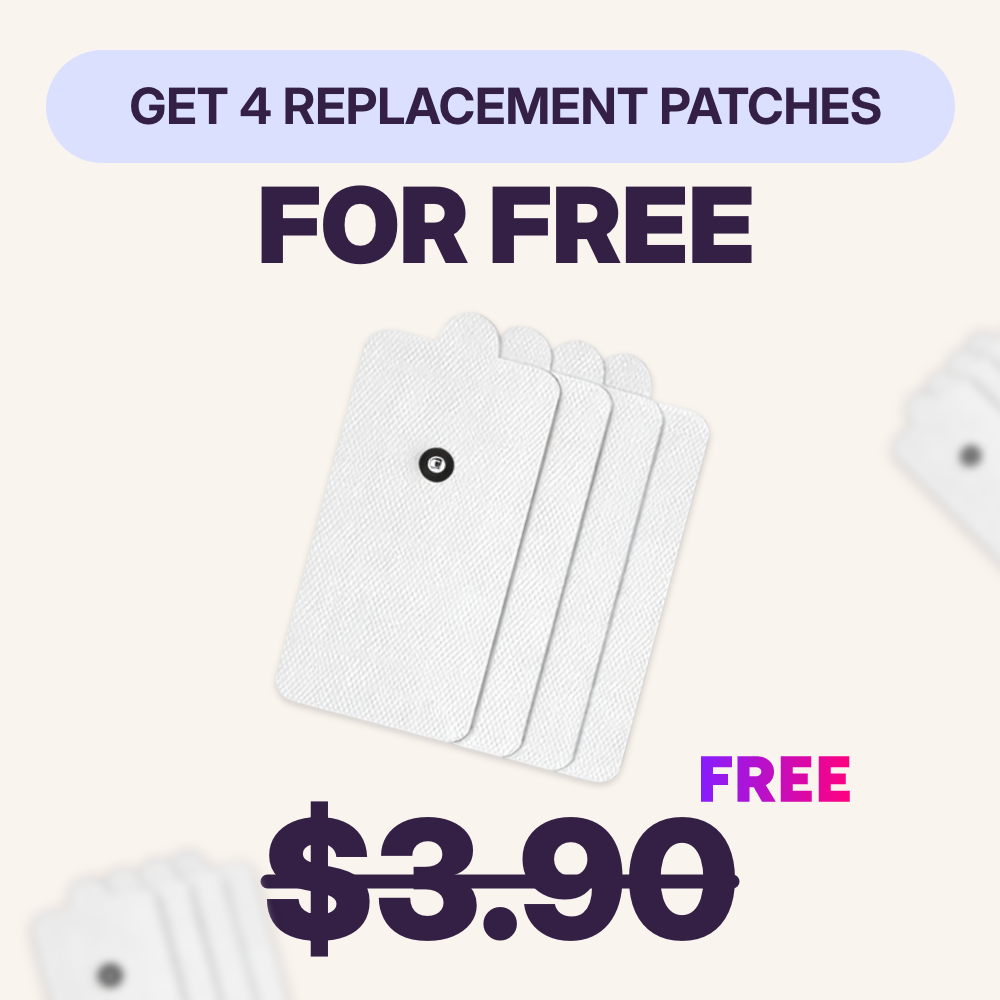
Reusable electrode pads
Included with each unit. Replacement packs available separately when needed.
Customer support
Questions before or after your workshop? Our team is available Monday–Saturday.
Choose your pack
Which pack is right for your group?
Both packs work well for workshops. The right choice depends on your group size and how you plan to run the session.
Small groups
$40 / kit
Best for: groups of 6 to 15 people, where participants rotate through the devices in pairs or small clusters.
- 3 devices + electrode pads
- Ideal for team sessions or seminars
- Rotation format works well with facilitation
Larger groups
$36 / kit
Best for: groups of 15 to 30+ people, or any setting where you want a more simultaneous, immersive experience.
- 5 devices + electrode pads
- More participants experience simultaneously
- Stronger collective impact in large workshops
Ready to run your first session?
The guide is free, the setup takes minutes, and the impact lasts. Start with the pack that fits your group, everything else is on this page.
SHOP NOWNeed a custom order or have a specific question? Contact us
Safe
Accurate
Powerful
Period Cramp Simulator : Real Menstrual Pain Device for Guys
The first device that lets partners experience real menstrual pain : adjustable intensity, clinically inspired, designed to spark the conversation that changes everything.

Our latest articles
View all-
Menstrual cramp simulators have moved beyond viral social-media challenges to become tools used in educational and awareness settings classrooms, workshops, and community health events where translating a verbal description of...
Menstrual Cramp Simulator: A Medical and Educat...
Menstrual cramp simulators have moved beyond viral social-media challenges to become tools used in educational and awareness settings classrooms, workshops, and community health events where translating a verbal description of...
-
Period cramp simulators use electrical stimulation to recreate the sensation of menstrual pain on the lower abdomen. Here's a clear, plain-English guide to how the technology actually works, what it...
How Do Period Cramp Simulators Work ?
Period cramp simulators use electrical stimulation to recreate the sensation of menstrual pain on the lower abdomen. Here's a clear, plain-English guide to how the technology actually works, what it...
-
If you've wondered whether a standard TENS unit can be used to experience what period cramps feel like, the short answer is: partially, yes but with significant limits and important...
How to Simulate Period Cramps With a TENS Unit ?
If you've wondered whether a standard TENS unit can be used to experience what period cramps feel like, the short answer is: partially, yes but with significant limits and important...